



openDAW is a next-generation web-based Digital Audio Workstation (DAW) designed to democratize music production and to resurface the process of making music by making high-quality creation tools accessible to everyone, with a strong focus on education and data-privacy. Please consider supporting this project on Patreon or ko-fi.
The Studio features a Spotlight command palette (Shift+Enter) for quickly running actions by name.
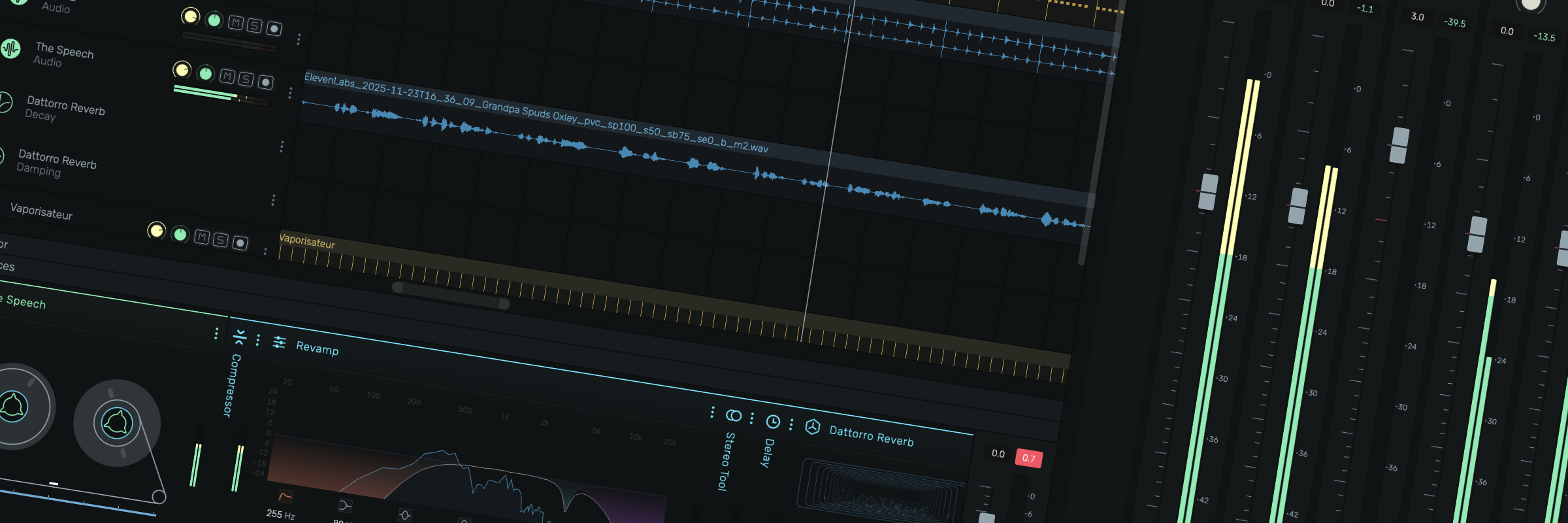
We are committed to transparency and community-driven development. See the project roadmap for upcoming milestones.
The source code for openDAW is available under the MIT License.
openDAW stands for radical simplicity and respect.
- No SignUp
- No Tracking
- No Cookie Banners
- No User Profiling
- No Terms & Conditions
- No Ads
- No Paywalls
- No Data Mining
To everyone who has contributed feedback, reported bugs, suggested improvements, or helped spread the word — thank you! Your support is shaping openDAW into something truly powerful!
Thank you @ccswdavidson, @Chaosmeister, @jeffreylouden, @solsos, @TheRealSyler, @Trinitou, and @xnstad for testing the repositories and identifying issues during the installation of openDAW!
Special shout-out to the biggest bug hunters: kanaris and BeatMax Prediction. Your relentless attention to detail made a huge difference!
Huge thanks to our ambassadors, whose dedication and outreach amplify our mission!
- Polarity
- kanaris
- Stephen Tai
- Thad Guidry
- Pathfinder
- One Sound Every Day (santino)
- Cal Lycus
- Jetdarc
- Truls Enstad
- p07a
- Ynot Etluhcs
- Mats Gisselson
- Dado
- centomila
- Ola
- SKYENCE
- BeatMax_Prediction
- Kim T
- Nyenoidz
- Bruce Hunter
- Steve Meiers
- 4ohm
- Yito
- Shawn Lukas
- Tommes
- David Thompson
- Harry Gillich
- OxVolt
- Wojciech Miłkowski
- Client
- skyboundzoo
- lokomotywa ($2.47)
- Localization Guide
- Accessibility Guide
- Developer i18n Notes
- Documentation Site Guide
- Cross-Origin Isolation Guide
- Versioning Policy
- Bootstrapping Overview
- Headless mode workflow – feature parity with Studio service, see headless vs studio
- Feature Flags
- Troubleshooting Guide
- Canvas Utilities
- Icon Library
- Notepad Guide
- File Management Guide
- OPFS Sample Storage
- Spotlight Developer Docs
- Search Feature
- Groove Examples
The Studio relies on a central colour system described by the following resources:
Key configuration files at the repository root:
.eslintrc.js– shared ESLint rules..markdownlint.yml– default Markdown lint settings..vale.ini– prose style guidelines.turbo.json– task runner setup.lerna.json– package publishing settings.typedoc.json– API documentation output options.package.json– workspace manifest and scripts.package-lock.json– placeholder lockfile.netlify.toml– sample Netlify deployment config.vercel.json– sample Vercel deployment config..gitignore– files excluded from version control.
openDAW tries to avoid external libraries and frameworks. Following is a list of the external libraries we currently use in the web studio:
- jszip (for openDAW project bundle file)
- markdown-it + markdown-it-table (for help pages)
- d3-force (for graph debugging)
Before starting, ensure you have the following installed on your system:
- Git is required for cloning the repository and managing submodules.
- mkcert is required to create a certificate for developing with https protocol.
- Node.js version >= 23. This is necessary for running the development server and installing dependencies.
- Sass While Sass is handled internally during the development process, you will need to ensure you have the binaries available in your environment if used outside the build system.
- TypeScript
- OpenSSL For generating local development certificates (), OpenSSL needs to be installed on your system. Most Linux/macOS systems have OpenSSL pre-installed.
git clone https://github.com/andremichelle/opendaw.git && cd opendaw
npm run cert– generate the HTTPS certificate (first run only)npm run clean– remove allnode_modulesand build artifactsnpm run install:deps– install required system toolsnpm install– install workspace packagesnpm run build– build all packagesnpm test– execute the test suitenpm run docs:devornpm run docs:build– generate documentationnpm run dev:studioornpm run dev:headless– start a development server- Navigate to https://localhost:8080 (port is important > cors sample api)
The repository uses Turbo to orchestrate builds, tests, linting, and
documentation tasks across all packages. Lerna manages package versions and
publishing via scripts like npm run publish-sdk. API documentation is produced
with Typedoc, and deployment targets are described in the Vercel and
Netlify configuration files (currently disabled).
Continuous integration runs on GitHub Actions. Workflows exist for deployment, documentation generation, quality checks, Discord notifications, and SFTP connectivity tests. They are currently disabled but serve as references for future automation. See the CI guide for details.


Watch Polarity's Video "there's a new FREE DAW in town"
We welcome contributions from developers, musicians, educators, and enthusiasts. To learn more about how you can participate, visit our Contribute page.
- Offline desktop build (e.g., via Tauri) or a standalone installable PWA — offer offline capability.
- Cloud-agnostic project storage — a facade layer that lets users plug in different cloud services (e.g., Drive, S3, Dropbox) for projects and sample libraries.
- Live remote collaboration — real-time session sharing and sync so multiple users can edit the same project concurrently.
- AI manual assistant — an embedded agent that answers context-aware questions and guides users through features as they work.
- AI-powered stem splitting — integrated source-separation to extract vocals, drums, and other stems directly inside the DAW.
- Import and Export - Contribute every possible file format IO
- opendaw.studio (prototype)
- opendaw.org (website)
- openDAW on Discord
- openDAW SDK
- openDAW on Patreon
- openDAW on ko-fi
This project is licensed under the MIT License
The bundled fonts (rubik.woff2 and OpenSans-Regular.ttf in packages/app/studio/public/fonts) are provided under the SIL Open Font License 1.1. See fonts/README.md for details.